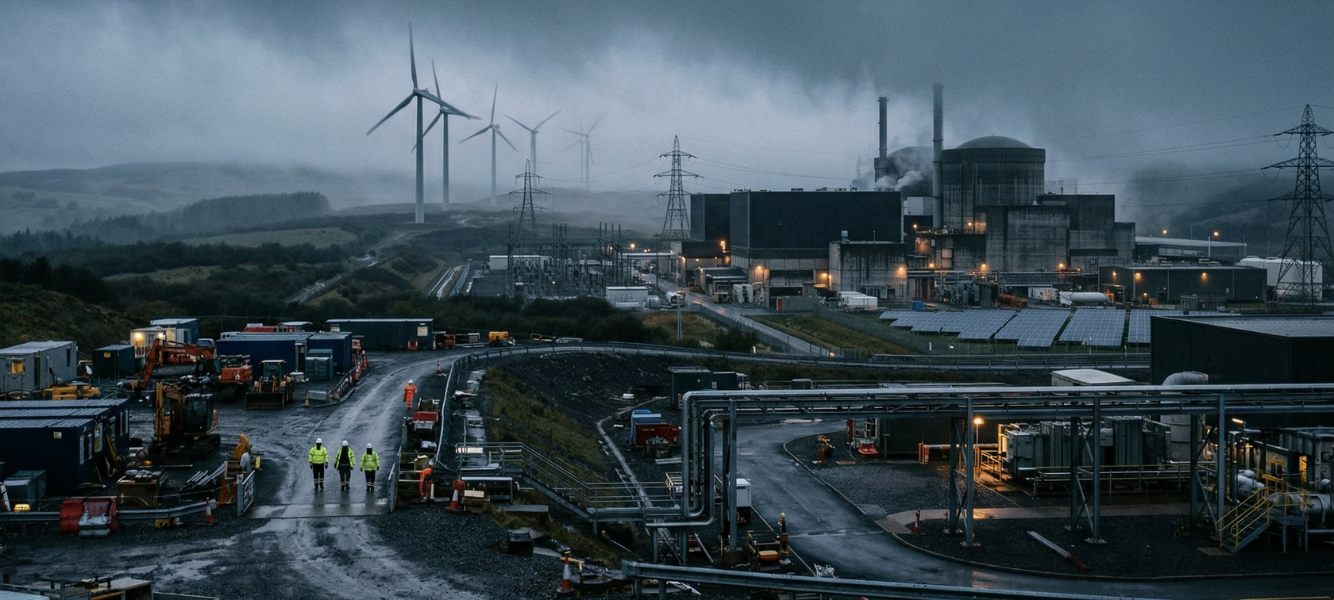


The UK government has announced the Contracts for Difference Allocation Round 7 results (CfD AR7 results), securing a record 14.7GW of renewable capacity across 201 projects.
The CfD AR7 results, published across January and February 2026, cover offshore wind, onshore wind, solar, floating offshore wind, and tidal stream.
CfD AR7 will unlock £27 billion of private investment and support up to 17,000 jobs across the UK through the 2020s and into the early 2030s.
A CfD is a contract that guarantees renewable generators a fixed price for electricity over 15 years, protecting both developers from low prices and billpayers from high wholesale costs.
For hiring managers and engineers planning projects between now and 2031, these results signal where capacity, capital, and workforce demand will concentrate.
Key takeaways
-
CfD AR7secured 8.4GW of offshore wind at an average strike price of £91.20/MWh (2024 prices), including three of the world’s largest wind farms.
-
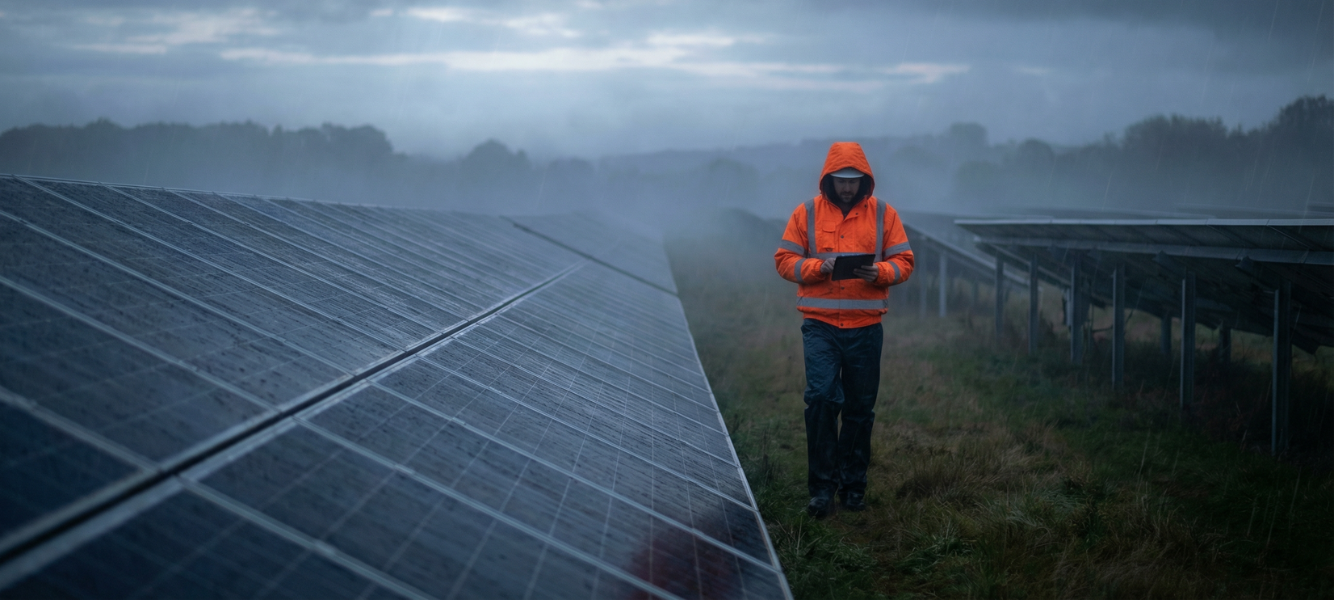
CfD AR7a added 6.2GW across onshore technologies, with solar securing 4.9GW at £65.23/MWh and onshore wind 1.3GW at £72.24/MWh.
-
The offshore wind strike price came in 40% lower than new gas, demonstrating renewables as the most cost-effective option for new generation.
-
Delivery years span 2027/28 to 2032/33, with the bulk of offshore wind commissions concentrated in 2029 to 2031.
What was awarded in CfD AR7 and AR7a
CfD AR7 was structured across two announcements covering different technology pots.
The offshore wind results (Pot 3 and Pot 4) were announced on 14 January 2026, and the onshore technologies (Pot 1 and Pot 2) followed on 10 February 2026.
Offshore wind (Pot 3):
8,245 MW across nine projects, with strike prices of £91.20/MWh for England and Wales and £89.49/MWh for Scotland.
Projects include Dogger Bank South projects (3GW), Norfolk Vanguard East and West (3GW combined), Berwick Bank (1.38GW), and Awel y Môr (775 MW). Delivery years range from 2028/29 to 2030/31.
Floating offshore wind (Pot 4):
192.5 MW across two projects at a strike price of £216.49/MWh.
Erebus (100 MW, Celtic Sea) and Pentland (92.5 MW, Scotland) are both scheduled for 2029/30.
Solar (Pot 1):
4,905 MW across 157 projects at £65.23/MWh. 72 projects totalling 1,871 MW are scheduled for 2027/28, and 85 projects totalling 3,034 MW for 2028/29.
Onshore wind (Pot 1):
1,306 MW across 28 projects at £72.24/MWh. 12 projects (626 MW) will deliver in 2027/28, and 16 projects (680 MW) in 2028/29.
Tidal stream (Pot 2):
21 MW across four projects at £265/MWh, with delivery in 2028/29 and 2029/30.
What a CfD really does
A CfD guarantees a generator a fixed price, known as the strike price, for each megawatt hour of electricity they produce.
If the wholesale market price falls below the strike price, the generator receives a top-up payment.
If the market price rises above the strike price, the generator pays the difference back.
This two-way mechanism protects both sides.
During the 2021 to 2022 gas crisis, CfD generators paid money back to consumers, shielding billpayers from the worst of high wholesale prices.
The result is stable revenue for developers and predictable costs for consumers.
What the CfD AR7 results means for developers and investors
Revenue certainty is the foundation of project finance.
The CfD AR7 results removes investment risk by guaranteeing a price over 15 years, lowering the cost of capital and making projects bankable.
AR7’s offshore wind strike price of £91.20/MWh is 19% lower than administrative price, reflecting strong competition and confidence in the UK market.
The solar strike price of £65.23/MWh represents a 6.5% reduction compared to AR6, demonstrating continued cost reductions.
The mix of technologies secured in AR7 will unlock substantial private investment, much of it flowing to UK supply chains, ports, and manufacturing.
What the CfD AR7 results means for delivery (grid, planning, supply chain)
Securing a CfD is a milestone, but it does not guarantee delivery.
Projects face practical constraints including grid connection timelines, planning consent, and supply chain capacity.
The bulk of offshore wind capacity is scheduled for 2029 to 2031, compressing construction activity into a narrow window.
In practice, this creates bottlenecks in installation vessels, turbine manufacturing, and substation fabrication.
Solar projects are front-loaded, with over 1,870 MW due in 2027/28, which will stress EPC contractors and inverter supply chains earlier in the delivery cycle.
Grid connections remain a pinch point. National Energy System Operator (NESO) reforms aim to accelerate connections, but legacy bottlenecks persist, particularly in East Anglia and Scotland.
The jobs signal (where hiring pressure rises next)
AR7 translates into sustained workforce demand across multiple disciplines and regions.
The phasing of projects dictates when and where pressure will build.
Roles likely to tighten in 2026 to 2028
Solar projects dominate the early delivery window, with 1,871 MW scheduled for 2027/28.
This will create immediate demand for EPC project managers, electrical design engineers, HV cable engineers, and site supervisors.
Onshore wind projects delivering in 2027/28 (626 MW) will require civil engineers, geotechnical specialists, and turbine installation crews.
Consenting and pre-construction roles will peak in 2026, including environmental consultants, planning advisers, and community liaison officers.
Offshore wind projects with 2028/29 delivery dates, including Norfolk Vanguard West (1.47GW), will require FEED engineers, subsea cable specialists, and procurement leads during this window.
Roles likely to tighten in 2029 to 2031
Offshore wind delivery accelerates sharply from 2029, with 3,775 MW scheduled for 2030/31 alone.
Construction phase roles will be in high demand, including offshore installation managers, marine coordinators, and commissioning engineers.
Berwick Bank (1.38GW, 2030/31) and the Dogger Bank South projects (3GW combined, 2030/31) will require substation design engineers, SCADA engineers, and grid connection specialists.
Floating wind projects (Erebus and Pentland, 2029/30) will drive demand for mooring specialists, naval architects, and floating foundation engineers.
Operations roles will follow, with asset managers, technicians, and performance engineers needed from 2030 onwards.
What to watch next
AR8 is expected to open later in 2026.
Maintaining a steady auction cadence is critical for supply chain confidence and investment planning.
Delivery milestones for AR7 projects will come into sharper focus through 2026 and 2027 as financial close is reached and construction contracts are signed.
Grid connection timelines remain a risk. NESO’s reforms to the connections queue will determine whether projects can meet their target delivery years.
Planning consent is another variable, particularly for onshore projects in England and Wales where local opposition can delay or derail schemes.
Supply chain capacity will be tested.
The concentration of offshore wind delivery in 2029 to 2031 will strain installation vessels, port infrastructure, and fabrication yards.
Projects that move quickly on procurement and contracting will secure the best terms.
How Astute helps
Astute supports clients across the renewables sector with permanent and contract hiring for offshore wind, onshore wind, solar, and grid infrastructure projects.
If you are planning your resourcing strategy for AR7 delivery, or you are an engineer or project professional looking to work on these projects, get in touch.
We work with developers, contractors, and consultants at every stage, from consenting through to commissioning and operations.
Contact our energy team to discuss your hiring plans or career next steps.