

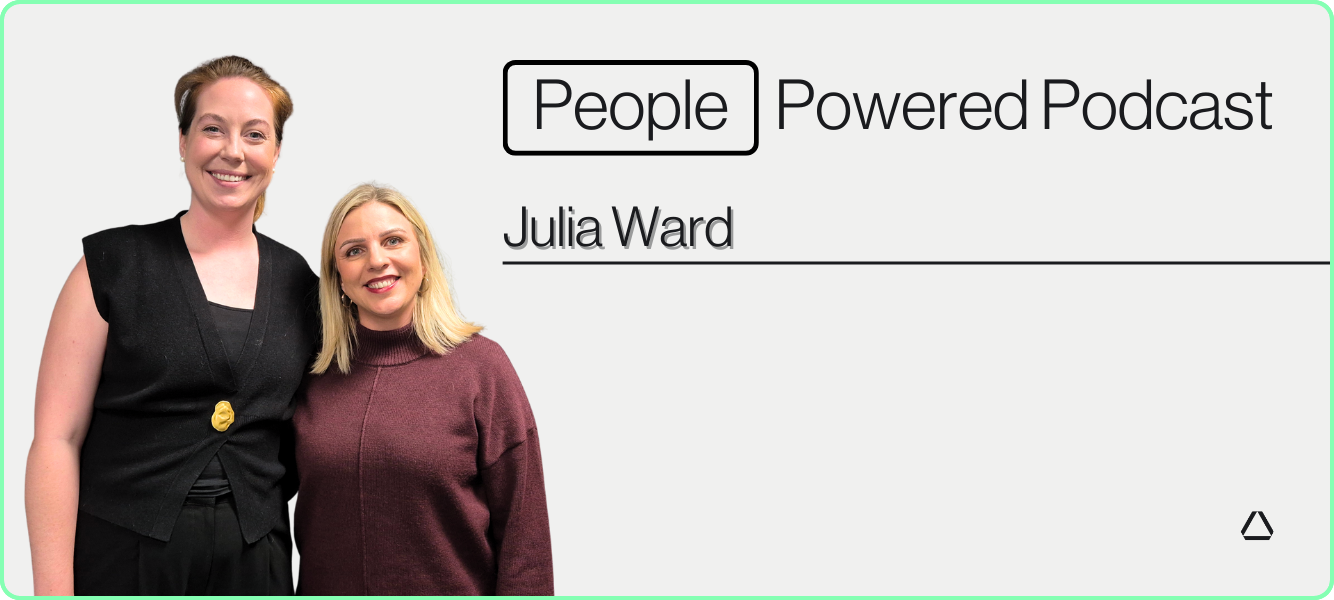
Listen to our podcast with Julia now
Julia Ward has a rare mix of credibility and clarity.
She leads renewable energy projects at Xela Energy, she’s been recognised as one of the UK’s Top 50 Women in Engineering, and she still makes the time to build pathways for other people to follow.
That is exactly why this episode matters.
In our latest Women in STEM podcast episode, Julia joins Mel Noble, Senior Recruitment Partner at Astute, for a straight talking conversation about what it takes to deliver clean power at pace, and what it takes to build a career in engineering without constantly second guessing yourself.
From problem solving to clean power delivery
Julia’s story starts where a lot of strong engineering stories start, curiosity, problem solving, and a stubborn streak.
She talks about being drawn to engineering through school subjects like chemistry and physics, then realising that the “traditional” route her degree was geared towards did not match where she wanted to make an impact.
That decision to pivot early is a theme that runs through the whole episode.
The energy transition rewards people who can zoom out, see what is coming, and build for it. Julia does that in her day job, and she does it in the way she thinks about careers too.
Why private wire is becoming a bigger part of the conversation
The UK market is at an interesting point. Everybody can feel the grid pressure, even if they are not living in the detail every day.
In the episode, Julia explains why private wire and self generation are becoming more common, particularly for organisations that need certainty, pace, and control over how they secure energy.
Her point is simple and hard to ignore, we cannot keep operating like the system will catch up on its own timeline.
As she puts it, “Address the policy first.”
Mentorship, without the paywall
A big part of this conversation is about people, not just projects.
Julia founded FLISS (Female Leaders in STEM Subjects) after hitting career decision points and realising how often high quality mentoring sits behind a paywall.
She built FLISS to make guidance more accessible, particularly for women who are early in their career, pivoting industries, or coming back after a break.
One of the most useful parts of the episode is how practical she gets about what mentoring actually is.
“Management isn’t mentorship,” Julia says, and then she explains how to “layer” mentors so you have the right support for the right decision, including the difference between internal career guidance and external perspective.
If you are building a career in a technical space, that’s a simple framework you can use immediately.
Confidence is a skill, not a personality type
There’s a moment in the episode where Julia speaks about how women can undervalue their own skill sets, not because they lack ability, but because they’ve been conditioned to be cautious about shining a light on it.
Her mindset shift is blunt and effective:
“Why shouldn’t I be in that room and why shouldn’t I be at that table?”
It’s not motivational fluff.
It’s a practical challenge to the internal story that holds people back.
What you’ll take from this episode
If you work in energy, engineering, or renewables, you’ll get a grounded view of where the market is going, and why models like private wire are gaining traction.
If you are earlier in your career, or mentoring others, you’ll come away with a clearer view of how to build support around your decisions, and how to stop talking yourself out of rooms you have earned the right to be in.
Listen now
Stream the podcast today.
If you’d like to talk to Astute about hiring in the energy sector, or you want to be considered for roles in renewables, get in touch.
And if you know someone who’s navigating a career move in STEM right now, share this episode with them. It will help.