


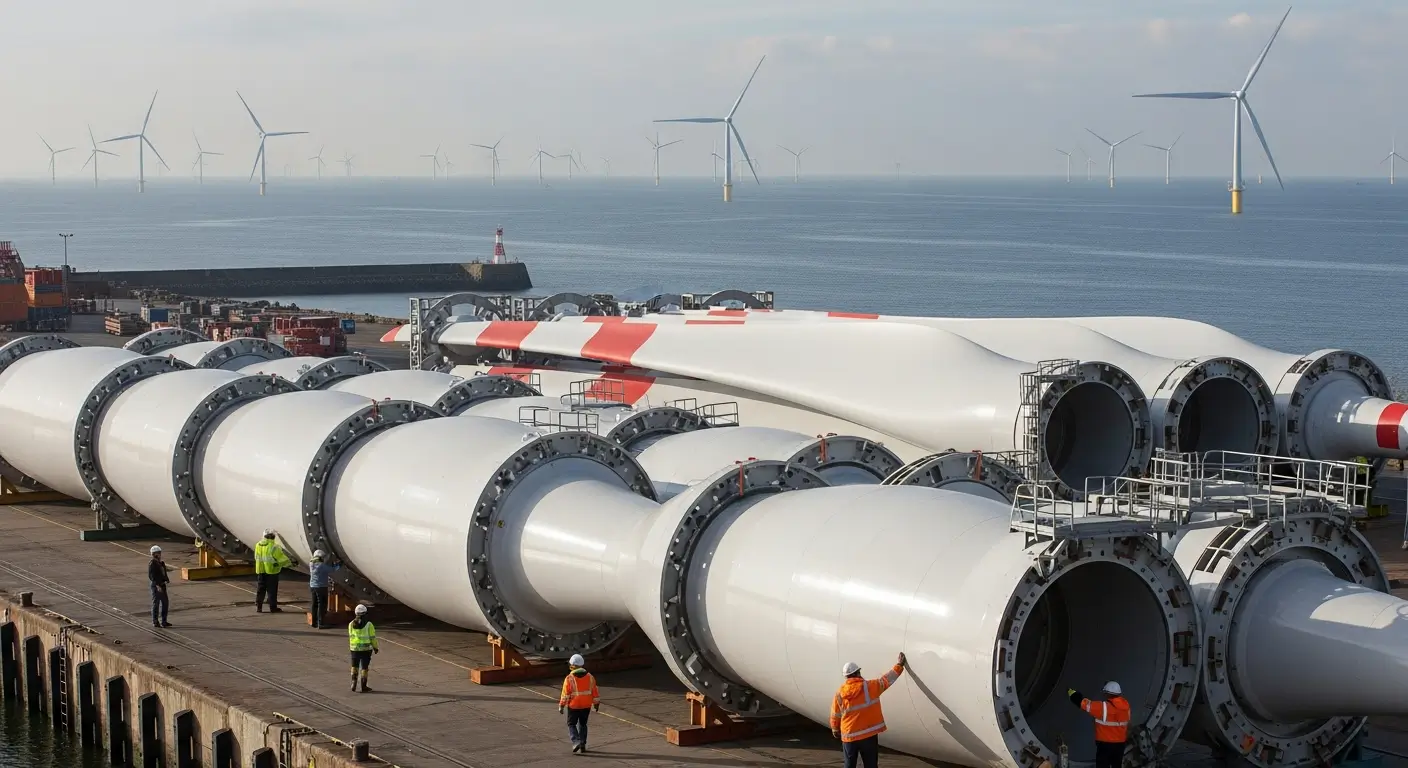
The UK wind energy sector has undergone a remarkable transformation over the past decade, dramatically changing employment, skills requirements, and workforce development.
This analysis examines the evolution of hiring trends from 2015 through 2025, highlighting the complex interplay between industry growth, government policy, and market dynamics.
Evolving Demand and Skills in UK Wind Energy
The UK wind energy sector has seen a fundamental shift in its workforce needs since 2015. What began as a nascent industry has evolved into a sophisticated sector requiring diverse technical and managerial expertise.
Initially, the most sought-after roles consistently included wind turbine technicians, electrical engineers, and project managers. Over time, however, these positions have become increasingly specialised.
The Offshore Specialisation
Offshore wind has been the primary driver of demand for specialised positions. As the sector has matured, roles like high-voltage electrical technicians—focused on substations and cable systems—have become critically important. Project management itself has grown increasingly complex, requiring professionals capable of coordinating massive, multi-billion-pound offshore installations.
The Digital Shift
Digital transformation has further reshaped hiring needs. By 2025, employers are increasingly seeking candidates with expertise in data analytics, artificial intelligence (AI), machine learning, and SCADA-related skills. These competencies were barely mentioned in wind energy job postings back in 2015.
Salary Progression and Benchmarks
Compensation within the UK wind energy sector has seen steady growth, reflecting the increased demand for specialised talent.
As of March 2025, the average salary for offshore wind positions is approximately £57,698 annually, equating to around £4,381 monthly or £25.98 hourly. The typical range spans from £48,090 to £57,698, with regional variations being significant. According to Totaljobs, the average for Offshore Wind roles specifically stood at £57,500 in February 2025.
For the broader renewable energy sector, ITJobsWatch reports a median annual salary of £55,000 as of March 2025. Notably, London consistently offers higher compensation packages, averaging around £60,000.
Critical Hiring Challenges and Skills Gap
The sector faces persistent workforce challenges that have deepened over the past decade. The most fundamental issue remains the widespread skills gap across technical disciplines.
As one industry leader noted, employers are “entering a period where we have a lot of competition for the same roles,” a problem exacerbated by a “lack of skill and lack of people coming through the education system.”
This shortage is particularly acute in specialised areas, including:
- High-voltage electrical engineering
- Offshore construction and maintenance
- Project management for large-scale developments
- Advanced digital skills such as AI and data analytics
The recruitment landscape has also been complicated by external factors, including Brexit, the pandemic, and changes to contractor tax regulations. One HR professional aptly described this combination as a “perfect storm” affecting the UK’s labour market.
Policy and Government Targets Driving Employment
Impact of Offshore Wind Targets
The UK government’s offshore wind targets have been the central driver of employment growth. The ambition to achieve 50GW of offshore wind capacity by 2030 has directly shaped recruitment strategies across the sector.
However, these targets have seen revisions. The original 50GW target was briefly increased to 60GW before being adjusted to a more realistic range of 43-50GW by 2030, reflecting current supply chain constraints. The UK currently relies on nearly 2,200 wind turbines across 35 offshore wind farms, contributing 13% of the nation’s electricity.
Clean Power 2030 Action Plan
The Labour government’s Clean Power 2030 Action Plan has further reshaped the employment landscape through several key initiatives. The plan outlines £40 billion in investments between 2025 and 2030, with significant portions dedicated to workforce development.
A particularly significant policy shift has been the decision to lift the ban on new onshore wind farms in England. This had previously constrained job growth in that subsector. This regulatory change has triggered increased demand for positions, including:
- Wind turbine technicians
- Project managers overseeing onshore developments
- Environmental consultants managing regulatory compliance
- Civil, electrical, and mechanical engineers
Future Workforce Projections and Specialisations
The most comprehensive industry analysis indicates that the UK offshore wind sector will employ approximately 104,401 people by 2030. This represents a dramatic increase from the 32,257 employed as of early 2023.
To achieve this growth trajectory, the industry needs to attract and retain around 10,000 new workers annually through 2030.
This growth will not be linear. A particularly sharp increase is expected in the short term, with workforce needs projected to reach 88,509 by 2026. This means over 56,000 new positions must be filled in just three years, coinciding with major offshore wind farms entering construction simultaneously.
Emerging specialisations will further reshape the talent landscape through 2030:
- Floating Offshore Wind: The UK’s ambition to deploy 5GW of floating offshore wind by 2030 has created demand for specialised roles in mooring systems, dynamic cable systems, and floating structure design.
- Grid Integration Specialists: As wind penetration increases, demand has grown for experts who can optimise wind energy systems for high-renewable grids, develop advanced control functions, and ensure grid stability.
- Cross-Sector Transfer Specialists: Facilitating workforce movement between traditional and renewable energy sectors has emerged as a specialised function. Professionals in this area map skills pathways and design targeted training programmes.
Sector Challenges Impacting Hiring
Grid Connection Bottlenecks
One of the most significant constraints on sector growth—and by extension employment—has been persistent grid connection delays.
As of late 2024, over 1,100 renewable energy projects remained stuck in grid connection queues. The pipeline of contracted projects awaiting connections across England and Wales reached a combined 176GW. The National Grid’s obligation to manage requests on a ‘first come, first served’ basis has limited its ability to prioritise ready projects, leading to criticism of so-called “zombie projects” that hold queue positions without progressing.
Scotland has been particularly affected despite generating approximately 40% of the UK’s wind capacity. Grid delays have hampered many new projects, especially in the Highlands and offshore areas, with significant consequences for regional employment.
Contract for Difference (CfD) Auction Impacts
The UK’s Contract for Difference (CfD) auction mechanism—designed to provide revenue stability—has had mixed impacts on employment.
Design flaws in the scheme were evident in the fifth auction round (AR5), which failed to attract a single offshore wind bidder. The primary issue was the maximum allowed strike price for offshore wind being set at £44/MWh (including grid connection costs). Industry experts deemed this “much too low” given recent inflation in construction and materials costs.
The consequences for employment have been substantial. When Vattenfall suspended construction on the 1.4GW Norfolk Boreas project due to a 40% cost increase, it directly impacted thousands of potential jobs. The failed AR5 auction effectively put an estimated £10 billion of investment on hold, with corresponding effects on job creation.
Workforce Transition Strategies
The sector’s approach to workforce development has changed considerably since 2015. Early strategies focused heavily on attracting new talent. By 2025, however, there is increasing emphasis on facilitating transfers from adjacent industries, particularly oil and gas.
Research indicates that 90% of oil and gas industry workers possess skills transferable to future offshore renewable energy roles.
This recognition has led to structured transition programmes, culminating in the Energy Skills Passport initiative scheduled for launch in January 2025. This joint effort between Renewable UK and Offshore Energies UK creates a framework for identifying which qualifications and training standards are mutually recognised across sectors.
The transition challenge remains significant: the UK’s oil and gas sector currently supports over 200,000 jobs, while offshore wind employs 32,000. Successfully bridging this gap requires not only skills mapping but also addressing cultural and operational differences.
Conclusion
The UK wind energy employment landscape has undergone a remarkable transformation between 2015 and 2025. It has evolved from a sector primarily focused on conventional engineering roles into a sophisticated industry requiring specialised technical expertise, digital capabilities, and cross-disciplinary competencies.
The industry now faces a dramatic workforce expansion challenge, needing to more than triple its personnel by 2030. Success requires coordinated action across policy, education, and industry domains.
Key priorities include streamlining grid connections, reforming the CfD auction mechanism to better reflect economic realities, and implementing structured programmes to facilitate workforce transitions from adjacent sectors. The sector’s employment future remains fundamentally tied to policy consistency.
Nevertheless, wind energy employment offers one of the UK’s most promising pathways for creating skilled, well-compensated jobs while simultaneously advancing climate objectives.
Citations:
Future UK Employment in Offshore Wind (2017)
Offshore Wind Skills Intelligence Report 2023
OEUK Economy and People Report 2024
IT Jobs Watch: Renewable Energy Roles
Jooble: Offshore Wind Salary Data
GreenMatch Guide to Wind Energy
TotalJobs Average Offshore Wind Salary
UK Offshore Wind Skills Study (2018)
Statista: UK Wind Industry Employment Statistics
Global Witness: UK Renewables vs. Oil Jobs Growth
NatCen: Wind Energy and Global Britain Report
Business Wire: UK Wind Power Market Outlook (2015-2025)
ONS: Wind Energy in the UK (June 2021)
Hydrogen Fuel News: UK Wind Power Market Update
CSG Talent: Investment in Wind Energy Jobs
UK Government: Renewable Energy Planning Database
RSM UK: Landscape for Renewable Energy in 2025
Stream Marine Training: Wind Jobs Forecast for 2025
IBISWorld Wind Power Generation Industry Report