


The latest Hiring Trends report from the Association of Professional Staffing Companies (APSCo), produced in partnership with Bullhorn, reveals contrasting trends across the professional staffing sector as businesses navigate ongoing market uncertainty.
The data shows that permanent hiring activity softened slightly in November, likely influenced by the unease around the Chancellor’s Budget.
New permanent jobs fell by 8% between October and November 2025 and are down 5% compared to the same month last year.
Permanent placements also dipped by 10% month-on-month, although they remain broadly stable year-on-year, indicating that confidence in long-term hiring is holding firm despite short-term fluctuations.
In contrast, the contract market continues to demonstrate resilience.
While new contract jobs declined by 10% between October and November, they grew by 14% compared to November 2024.
Contract placements followed a similar pattern, with only a minimal month-on-month decline in November but a notable 27% increase year-on-year.
This sustained growth highlights the ongoing demand for flexible staffing solutions as organisations seek agility in an uncertain economic climate.
Samantha Hurley, Managing Director at APSCo UK, said, “The latest data highlights the resilience of the contract market, which continues to deliver strong year-on-year growth despite short-term fluctuations. This reflects the flexibility businesses need to manage uncertainty while maintaining access to critical skills.”
Andy Ingham, SVP Sales, EMEA & APAC, said, “November saw month-over-month softening in both permanent and contract jobs, but underneath that dip, the fundamentals remain strong. Contract hiring continues to outperform, with solid year-over-year gains in both jobs and placements.”
James Barker, Senior Recruitment Partner, Astute People, added: “The contract market within power generation, especially for new-build energy projects across EfW, Biomass, and CCGT, remains exceptionally buoyant.
“At Astute, we’ve seen a relentless demand for highly specialised contractors – engineers, commissioning leads, and project managers – who can be mobilised quickly. This isn’t just about short-term flexibility; it’s a strategic necessity.
“With the UK’s ambitious Net Zero targets driving a massive project pipeline, companies are using contract resource to plug critical, high-level skills gaps on complex, multi-year infrastructure developments, ensuring they hit their construction and commissioning deadlines.”
Why Contract Recruitment in Power Generation is Buoyant
The strong, sustained growth in contract hiring within the UK’s power generation sector is directly tied to a combination of political commitment, critical infrastructure funding, and the immediate, project-based nature of the energy transition.
1. Project Confirmation and Investment Surge
The primary driver is the sheer number of large-scale energy projects that have recently received final investment decisions and regulatory approvals, necessitating immediate, project-lifecycle-based recruitment.
- Renewable Energy Pipeline: Major new solar, offshore wind, and battery storage projects have been confirmed. Sunnica, Gate Burton, and Mallard Pass collectively add over 1.4GW to the UK’s capacity. (GOV.UK link). Construction requires a heavy reliance on contract professionals.
- Grid Infrastructure Reform: Recent reforms by the National Energy System Operator (NESO) have cleared a path for 132GW of aligned projects to proceed. (Business Green link). This de-risks connection timelines, pushing projects into the construction phase.
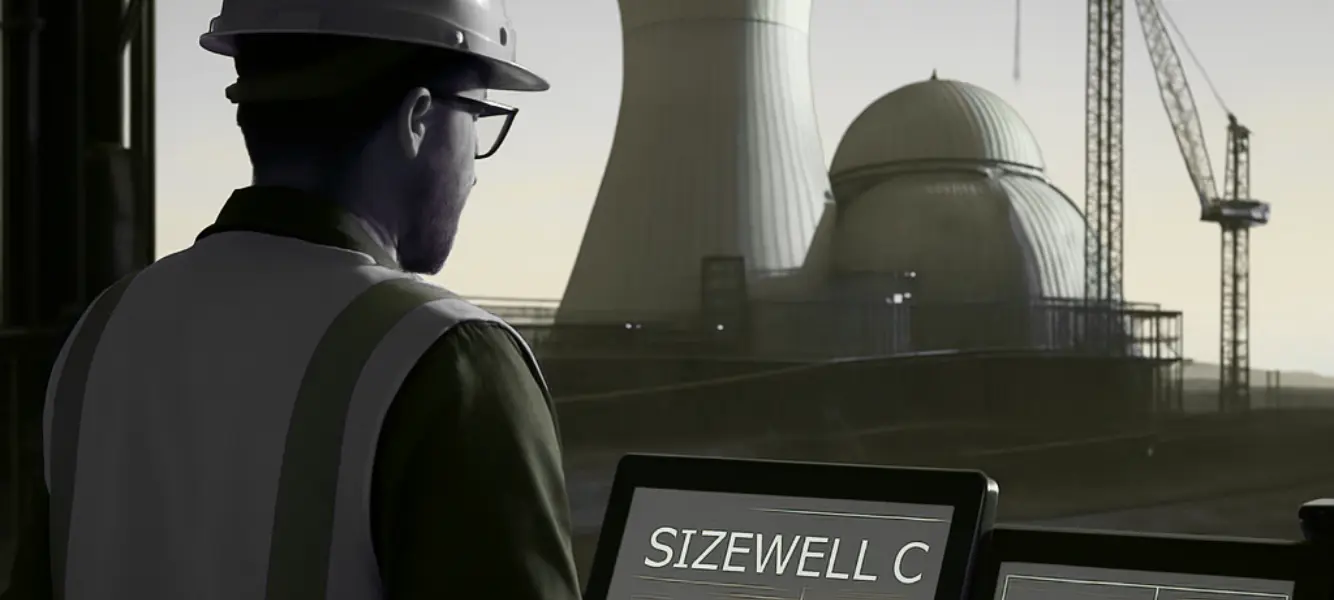
- Nuclear Expansion: Development of Sizewell C and Small Modular Reactors (SMRs) creates intense demand for nuclear-accredited engineers. Contract recruitment is the primary method for sourcing critical skills for defined phases like commissioning.
2. Strategic Need for Specialist Flexibility
Contractors are not simply filling gaps; they are providing the specialist expertise needed for complex, time-bound phases of a project.
- Commissioning and Mobilisation: For new-build power stations (like EfW or CCGT) or large-scale renewables, the commissioning phase is highly technical and short-lived. Companies prefer to hire contractors for these specific 6-18 month periods to manage the high-risk, specialist work.
- Skills Shortages: The UK’s commitment to Net Zero by 2050 requires a massive workforce shift. With a forecast of up to 725,000 new jobs in low-carbon sectors by 2030 (GOV.UK link), there is intense competition for high-demand roles like Welders, EC&I Engineers, and Project Managers. Contract hiring offers a competitive and fast route to securing this scarce talent.
The fundamental shift towards massive, project-based infrastructure necessary for the clean energy transition perfectly aligns with the agility and specialist focus that the contract recruitment market provides.