

In 2025, Britain finally proved that a modern power system can run without coal.
At the same time, government and regulators signed off investment decisions that will shape the energy workforce well into the 2030s.
For employers, the big story wasn’t a single project or policy announcement, it was the combination of record renewable generation, major grid and nuclear commitments, and a clear acknowledgement that the skills gap is now one of the biggest risks to delivery.
This review picks out the changes that actually mattered for hiring in 2025, then looks at what they mean for your 2026 strategy.
Coal exits, renewables step up
The headline structural shift in 2025 was simple.
Renewables supplied roughly half of UK electricity, gas did most of the remaining heavy lifting, and coal quietly disappeared from the mix.
Britain had already closed its last coal plant in late 2024, but 2025 was the first full year where coal provided essentially zero power on the system. That is a symbolic milestone, but it also underlines how quickly the generation mix has changed in a decade.
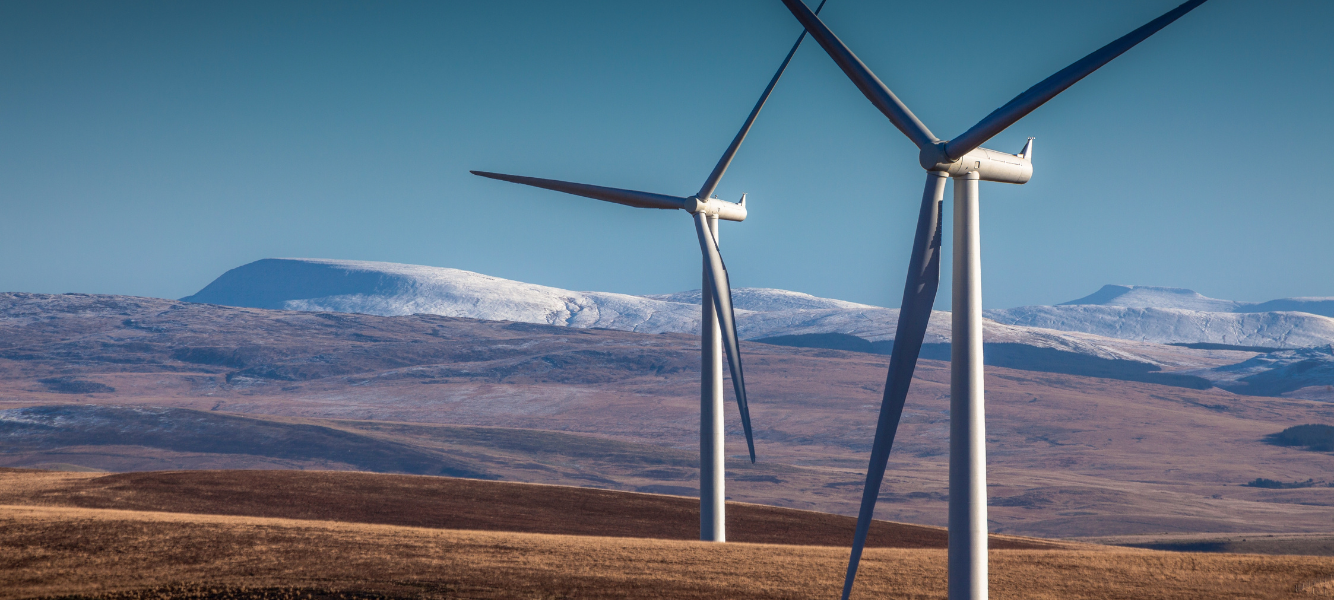
In parallel, renewable output continued to climb. Strong performance from offshore wind and a further ramp up in solar meant that, across key months, more than half of electricity came from renewable sources.
Live system data regularly showed periods where wind and solar together outpaced gas by a clear margin, with nuclear, imports and storage doing the balancing work.
For hiring, this matters in three ways:
- First, careers in coal and traditional thermal plant are no longer a long term option for new entrants. The work now sits in flexible gas, energy from waste and peaking plant, often linked closely to renewables and storage.
- Second, the demand story for wind, solar, storage and grid flexibility is not a marketing slogan, it is backed by hard system data. That gives engineers and technicians confidence to commit their careers to these technologies.
- Third, the shift puts much more pressure on networks, system operation and flexibility. The more variable generation on the system, the more value there is in skills that can keep it stable.
The rest of the year was about whether policy and investment would keep up with that reality.
Investment decisions that lock in demand for the 2030s
Three sets of decisions in 2025 will shape energy jobs for years to come, grid and networks, nuclear new build, and the creation of Great British Energy.
Grid and networks, billions committed to make the system work
Ofgem gave the green light to a multi billion pound investment programme for electricity and gas networks over the next five years, as the opening phase of a much larger package expected to run to around ninety billion pounds by 2031.
The focus is clear. Britain now needs to move huge volumes of power from offshore wind projects in the North Sea and Scottish waters, and from new solar and storage schemes, to homes and industry across the rest of the country. That requires new high voltage lines, upgraded substations, smarter control systems and more flexible local networks.
From a hiring perspective, this locks in sustained demand for:
- Transmission and distribution engineers
- Protection and control specialists and SCADA professionals
- Project managers and construction managers for substations, cable routes and overhead lines
- Planners, consenting specialists and land rights professionals
These are not one year projects. For many organisations, the challenge will be how to build and retain teams that can deliver throughout a multi year investment cycle, without burning people out or losing them to competitors.
Nuclear new build, from policy documents to real projects
The second major theme was nuclear finally moving from plans to firm commitments.
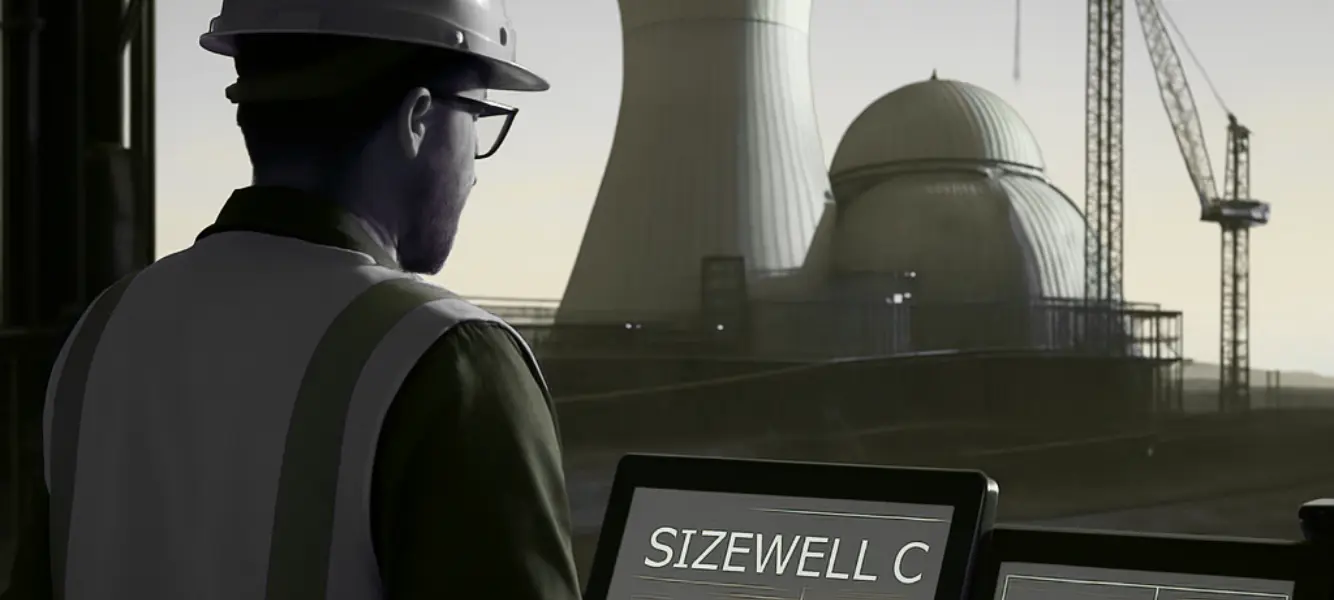
Sizewell C secured its Final Investment Decision in 2025, confirming government and investor backing for what ministers describe as the biggest clean energy project in a generation. The twin unit plant will take many years to construct and commission, and will support tens of thousands of jobs across its supply chain.
Later in the year, Wylfa on Anglesey was confirmed as the first site for the United Kingdom’s small modular reactor programme, with plans for three Rolls Royce SMR units. The project is being developed through Great British Nuclear, with a clear intent to create a repeatable design that can be deployed on other suitable sites.
The hiring implications are significant.
- Long term demand for civil, mechanical and electrical engineers with nuclear experience
- A step change in requirements for project controls, commercial, planning and quality professionals
- Opportunities for experienced workers from defence, oil and gas and large infrastructure to retrain into nuclear new build
- A need for early talent programmes in regions such as Suffolk and North Wales, to build a pipeline of local skilled workers
For employers, nuclear new build is both a risk and an opportunity. It will compete harder for many of the same skills that conventional power, offshore wind and major infrastructure rely on. At the same time, it offers a strong, long term story that can attract people who want to work on nationally significant projects.
Great British Energy, a new type of employer in the mix
The third major decision was the creation and launch of Great British Energy, a new publicly owned clean energy company.
In 2025, Great British Energy published a strategy that set out plans to develop or co invest in around fifteen gigawatts of clean generation and storage by 2030. The company is backed by billions of pounds of public capital and is expected to crowd in further private investment, supporting thousands of jobs across the UK.
The early focus is on technologies such as onshore wind, solar, battery storage, district heating and community energy. For the workforce, it introduces a new type of employer, one that blends commercial projects with a public mandate to support energy security, affordability and community benefit.
This will have several knock on effects:
- Stronger competition for project development and delivery talent in onshore renewables and storage
- More demand for people who understand community engagement and local benefit models
- New opportunities for candidates who want to work on publicly owned infrastructure rather than purely private schemes
Taken together, these investment decisions create a clear direction of travel. The system is committed to large scale build out of networks, nuclear and clean generation over the next decade, which in turn commits the sector to securing and developing the people to deliver it.
Policy shifts that keep the project pipeline moving
Alongside the headline investments, government made a series of policy and planning changes in 2025 that will shape where and how projects come forward.
Solar Roadmap and a serious push on rooftops
The Solar Roadmap, published in the middle of the year, set out a joint government and industry plan to radically increase solar deployment across the United Kingdom. It included over seventy actions, covering everything from planning reform and grid access to skills, standards and consumer protection.
While the exact capacity numbers will change over time, the overall direction is clear. The plan envisages a large increase in solar capacity by 2030, with a significant share coming from rooftops on homes, commercial buildings, warehouses and car parks.
For employers, this means sustained demand for:
- Solar designers and engineers working on rooftop and ground mounted schemes
- Roof based commercial installation teams who can work safely at height
- Grid connection specialists able to integrate more distributed generation
- Asset managers and operations and maintenance teams for growing portfolios
Planning updates and onshore wind
Government also updated the National Policy Statements for energy infrastructure, with the aim of aligning planning decisions with net zero and energy security goals. A key element was bringing onshore wind back into the nationally significant infrastructure regime in England, which should, over time, help more projects come through the system.
Coupled with the solar roadmap, these planning changes send an important signal. Large parts of the energy transition will take place close to communities, not just offshore or in remote locations. That requires planners, environmental specialists and community engagement professionals who can navigate local concerns and build trust.
Heat, buildings and the quieter part of the transition
The Clean Heat Market Mechanism came into force in April 2025, alongside relaxed planning rules for air source heat pumps. While this area receives less media attention than nuclear or offshore wind, it is central to decarbonising homes and buildings.
For the workforce, it represents a slow but steady shift in demand from traditional gas boiler installation and maintenance towards low carbon heating. Installers, surveyors, designers and commissioning engineers who build competence in heat pumps, heat networks and better controls will be in a strong position over the next decade.
The skills crunch moves from theory to reality
For several years, reports have warned that the United Kingdom will need hundreds of thousands of additional workers in clean energy by 2030. In 2025, that stopped being a distant projection and started to show up in day to day hiring.
The government’s Clean Energy Jobs Plan set out a projection of around four hundred thousand extra clean energy jobs by 2030. That implies job numbers in the sector growing by roughly ten percent every year between 2023 and 2030.
Industry groups such as Energy UK highlighted that this would mean doubling the size of the clean energy workforce in a relatively short period and warned that skills and supply chains were becoming critical constraints on delivery, alongside planning and grid connections.
Astute’s own experience across power, nuclear and renewables backed this up.
In 2025 we saw:
- Strong competition for grid, connections and protection roles, across both utilities and developers
- Growing pressure on project controls, planning and commercial teams, especially on complex, multi stakeholder projects
- Continued demand for experienced operations and maintenance technicians in wind, solar, storage and conventional generation
- A noticeable increase in candidates from oil and gas, defence and heavy industry looking to move into low carbon roles, often with high expectations on salary and progression
In many cases, the bottleneck was no longer the volume of applicants, it was the number of candidates who could pass security, meet competency requirements and commit to projects that might run for many years.
The result is simple. Employers who treat energy hiring as a transactional exercise, advertising roles and waiting for the right CVs to arrive, are finding it harder and slower to secure the people they need.
What the most successful employers did differently in 2025
The good news is that some organisations managed to navigate this pressure more effectively than others. Across our work in 2025, several themes stood out.
Clear, efficient hiring processes
Clients who moved fastest on hard to fill roles tended to:
- Strip out unnecessary interview stages
- Make sure decision makers were aligned on the role from the outset
- Communicate timelines clearly to candidates and stick to them
- Avoid “we will just see who else is out there” delays once they had identified a strong person
In a market where skilled candidates may be juggling multiple offers, clarity and speed can be the difference between securing and losing someone.
Realistic offers and honest conversations
The most successful employers had a clear view of current market rates and avoided trying to secure experienced candidates on out of date salary bands. They were transparent about total compensation, bonus structures, site allowances and overtime. They also articulated progression, training and work life balance in concrete terms, rather than generic promises.
Candidates notice the difference between a polished job advert and an honest conversation. In many cases, clear progression paths and realistic workloads did as much to win people over as headline salary figures.
Broader thinking on backgrounds
Another important shift was a greater willingness to consider candidates from adjacent sectors.
We saw clients have success where they:
- Looked seriously at applicants from oil and gas, defence, rail and heavy manufacturing
- Invested in structured onboarding and cross training, rather than expecting a perfect sector fit on day one
- Prioritised core technical aptitude, safety mindset and attitude, then built the rest
This approach widens the talent pool without sacrificing standards, which is essential in areas where the pure renewables or nuclear talent pool is already stretched.
Smarter use of recruitment partners
Finally, the employers who secured the hardest to find skills tended to treat recruitment as a partnership, not a last resort.
They engaged early on workforce planning, used retained or exclusive models for business critical roles, and involved recruiters in shaping job descriptions, salary ranges and candidate propositions. That allowed them to move quicker when the right people appeared and to maintain a pipeline of engaged talent for future needs.
How to stress test your 2026 hiring strategy
Looking ahead, most of the trends that defined 2025 are not going away.
Coal is gone.
Renewables and storage are growing.
Networks and nuclear are embarking on long build programmes.
Policy is broadly aligned with net zero, even if individual decisions remain contested. The demand for skilled people is rising more quickly than the supply.
As you plan your 2026 hiring, it is worth asking some hard questions.
- Do you have a clear view of which projects will move from development to delivery in the next twelve to twenty four months, and which roles are truly critical to those milestones
- Are your salary bands, benefits and working patterns competitive for the people you are trying to hire, not just aligned with internal benchmarks
- How quickly can you realistically move from CV to offer on a business critical role, and who actually needs to sign off
- Where could you widen your talent pool, for example by opening up to adjacent sectors or regions, without compromising safety or quality
- Which roles justify a deeper partnership approach, for example retained search, long term talent pooling or targeted campaigns, rather than relying on contingent recruitment and job boards
If 2025 showed anything, it is that energy hiring is now a strategic risk and opportunity, not an administrative task.
Organisations that treat it accordingly are more likely to deliver on their commitments, keep their best people and attract the next generation of talent.
At Astute, we are working every day with power, nuclear and renewables businesses that are navigating exactly these challenges.
If you would like to sense check your plans for 2026 or benchmark your approach against what we are seeing in the market, we would be happy to talk.
Sources and further reading
- GB Electricity Data, live and historical generation mix and carbon intensity for Great Britain: https://www.energydashboard.co.uk/data
- Department for Energy Security and Net Zero, Clean Energy Jobs Plan (HTML overview): https://www.gov.uk/government/publications/clean-energy-jobs-plan/clean-energy-jobs-plan-html
- Department for Energy Security and Net Zero, Clean Energy Jobs Plan (full PDF): https://assets.publishing.service.gov.uk/media/68f762b324fc2bb7eed11a45/clean-energy-jobs-plan.pdf
- Department for Energy Security and Net Zero, Solar Roadmap landing page: https://www.gov.uk/government/publications/solar-roadmap
- Department for Energy Security and Net Zero, Solar Roadmap accessible webpage: https://www.gov.uk/government/publications/solar-roadmap/solar-roadmap-united-kingdom-powered-by-solar-accessible-webpage
- Department for Energy Security and Net Zero, Carbon Budget and Growth Delivery Plan (HTML): https://www.gov.uk/government/publications/carbon-budget-and-growth-delivery-plan
- Department for Energy Security and Net Zero, Carbon Budget and Growth Delivery Plan (PDF): https://assets.publishing.service.gov.uk/media/6901d0c2a6048928d3fc2b55/carbon-budget-and-growth-delivery-plan-report.pdf
- Ofgem, RIIO 3 Final Determinations for Electricity Transmission, Gas Distribution and Gas Transmission: https://www.ofgem.gov.uk/decision/riio-3-final-determinations-electricity-transmission-gas-distribution-and-gas-transmission-sectors
- Ofgem, RIIO 3 Final Determinations for Electricity Transmission (ET) PDF: https://www.ofgem.gov.uk/sites/default/files/2025-12/RIIO-3-Final-Determinations-ET.pdf
- UK Government, Sizewell C gets green light with final investment decision: https://www.gov.uk/government/news/sizewell-c-gets-green-light-with-final-investment-decision
- Sizewell C, Final Investment Decision reached for Sizewell C: https://www.sizewellc.com/news-views/final-investment-decision-reached-for-sizewell-c-the-biggest-british-clean-energy-project-in-a-generation/
- UK Government, North Wales to pioneer UK’s first small modular reactors: https://www.gov.uk/government/news/north-wales-to-pioneer-uks-first-small-modular-reactors
- Rolls-Royce SMR, Wylfa confirmed as Rolls-Royce SMRs first UK site: https://www.rolls-royce-smr.com/press/wylfa-confirmed-as-rolls-royce-smrs-first-uk-site
- Great British Energy, Accelerating the UK’s clean energy future and Strategic Plan links: https://www.gbe.gov.uk/blog/accelerating-uks-clean-energy-future and https://www.gbe.gov.uk/strategic-plan-2025-html
- UK Government, Clean energy jobs boom to bring thousands of new jobs: https://www.gov.uk/government/news/clean-energy-jobs-boom-to-bring-thousands-of-new-jobs
- Energy UK, Energy UK Explains: Building the future energy workforce: https://www.energy-uk.org.uk/publications/energy-uk-explains-building-the-future-energy-workforce/