

By Kevin Over
The UK power sector is in the midst of a historic transformation, and the whispers are true: it’s hiring like crazy. As Britain races to decarbonise and keep the lights on, the demand for skilled professionals across power generation recruitment is exploding. This massive growth means building, a lot.
We are seeing a boom in major projects:
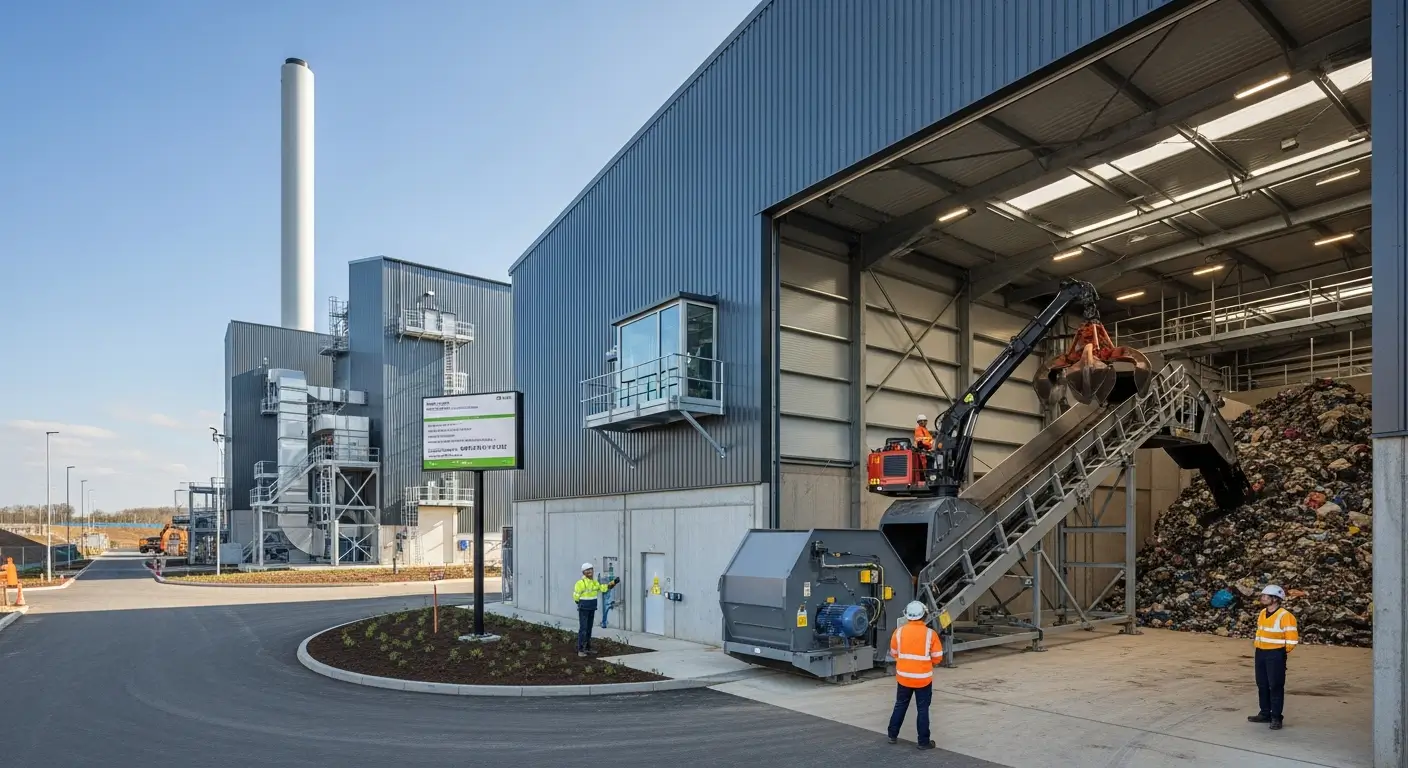
- Energy-from-waste (EfW) plants now process 16.8 million tonnes of rubbish annually, with over four million extra tonnes of capacity in late-stage development.
- Gas turbines and Industrial CHP schemes are being deployed nationwide to back up record renewable generation.
All this critical infrastructure needs people. Industry body Energy & Utility Skills predicts the sector must add 150,000 employees by 2030, an eighty-three per cent jump. CIWM expects the resources and waste sector to need another 200,000 by 2040.
Translation: Employers are scrambling for top talent right now.
If you’re a candidate looking for a job or an employer hiring exceptional talent, this guide is for you. We’ve done the digging to reveal the nine permanent roles hiring managers lose sleep over, why demand is soaring for each one, and the exact skills and salaries you’ll need to land them. Upload your CV today to get started.
1. Project Manager – EfW (Energy from Waste)
Why demand is high
The UK is investing heavily in new EfW facilities and other low-carbon projects, which drives a surge in demand for experienced project managers to lead complex builds. The construction pipeline is strong, with multiple EfW plants in planning. Residual waste processed by EfW rose 4.3% in 2024, with +4.85 million tonnes of capacity in late-stage development. These factors, coupled with a nationwide shortage of engineering project talent, mean rising salaries and fierce competition for skilled project managers.
Core responsibilities for Project Managers in Power Generation:
- Oversee planning, design, and construction of new power plants (budget, schedule, quality).
- Coordinate EPC teams, contractors, and suppliers to meet technical and environmental standards.
- Manage project risks, stakeholder communication, and commissioning to ensure on-time, on-budget delivery.
Essential skills and certifications:
- Project management expertise – Proven track record on large energy/infrastructure projects (Prince2 or APM certification valued).
- Engineering background – Degree in mechanical, electrical, or chemical engineering; understanding of power plant systems.
- Regulatory knowledge – Familiar with UK environmental permitting and HSE regulations for construction (CDM, planning consents).
Typical salary range (UK-wide): Experienced Project Managers typically earn £60,000–£80,000, often with performance bonuses.
2. Commissioning Engineer – CCGT (Combined Cycle Gas Turbine)
Why demand is high
Commissioning engineers are essential for bringing new power stations and major upgrades online, yet they are in short supply. This role has been on the UK’s official Shortage Occupation List for years, indicating chronic talent scarcity. In the past 12 months, multiple CCGT, OCGT, and CHP projects (including grid stability schemes) have created high posting volumes for commissioning specialists. Employers are responding with notable salary increases; for example, CCGT commissioning roles often pay £45–60k to attract talent. National projections show power engineering roles expanding significantly this decade.
Core responsibilities:
- Develop and execute commissioning plans for gas turbines, HRSGs (Heat Recovery Steam Generators), and balance-of-plant systems.
- Test and calibrate control systems, protection devices, and safety interlocks to verify performance and compliance.
- Troubleshoot technical issues during startup and hand over a fully operational plant to the operations team.
Essential skills and certifications:
- Technical engineering skills – Degree or HND in electrical/mechanical engineering; deep knowledge of CCGT systems and instrumentation.
- Certification & safety – Qualified Commissioning Engineer status; ECS or COMPEX (for hazardous areas) and IOSH/NEBOSH awareness for safe energisation.
- Analytical & procedural ability – Adept with commissioning procedures, test documentation, and grid compliance standards (e.g., National Grid codes).
Typical salary range (UK-wide): Commissioning Engineers earn £45,000–£60,000 (higher with experience), reflecting a premium on this scarce skill.
3. Plant Manager – CCGT Power Station
Why demand is high
The role of the Plant Manager is arguably the most critical. UK power stations face a significant leadership succession challenge, with about one-third of the energy workforce over 50. This creates a talent gap because few candidates possess the rare mix of technical, regulatory, and managerial expertise needed to run large CCGT or EfW facilities. This gap, combined with intense pressure to improve efficiency, has led to prolonged vacancies and rising salaries. Plant Managers earn an average of ~£60k (with upper ranges exceeding £70k+), reflecting the high demand for this skill set. This continued growth in new energy projects and operational complexity requires experienced managers to steer these plants through the energy transition.
Core responsibilities:
- Overall accountability for power station performance – safety, output, efficiency, and regulatory compliance.
- Lead and develop the operations and maintenance teams, setting strategy for training, staffing, and contractor management.
- Financial and asset management of the plant, including budgeting, outage planning, and capital improvements.
Essential skills and certifications:
- Extensive power generation experience – Typically 10+ years in plant operations, with deep knowledge of gas turbine systems or boiler-steam cycle (for EfW/CHP).
- Leadership & communication – Strong people management skills; ability to coordinate across engineering, commercial, and regulatory stakeholders.
- Qualifications – Often a degree in engineering or equivalent; IOSH/NEBOSH certification for safety leadership is common.
Typical salary range (UK-wide): £50,000–£70,000 annually (plus bonuses), depending on plant size and complexity. Larger stations can offer £80k+, reflecting the high responsibility.
4. Shift Team Leader – EfW Plant
Why demand is high
The rapid expansion of EfW and biomass plants has created high demand for experienced Shift Team Leaders to run 24/7 operations. These supervisors are the backbone of safe and efficient plant running, but the talent pool is limited. Many veterans are retiring, and fewer new operators have comparable experience, leading to talent shortages and longer hiring times. Several new EfW facilities have come online in the past year, each requiring multiple shift teams. Employers are responding with higher pay, with some EfW shift leaders now commanding £60k+ including shift allowances.
Core responsibilities:
- Lead an operations shift team (control room and field operators) to ensure the plant meets power output and environmental targets.
- Make critical real-time decisions on load changes, issue response, and deputise as Operations Manager when needed.
- Enforce safety procedures and coordinate with maintenance during shift, including permit-to-work issuance and incident response management.
Essential skills and certifications:
- Operational expertise – Strong background as a control room operator or similar, with detailed knowledge of steam turbine, boiler, and flue gas systems (EfW or power station experience).
- Leadership and training – Ability to supervise and train multi-skilled teams; excellent communication for shift handovers and reporting.
- Certifications – IOSH or NEBOSH safety certification is often required; Senior Authorised Person (HV) status is a plus.
Typical salary range (UK-wide): £55,000–£70,000 (including shift allowances).
5. Control Room Operator – CCGT Plant
Why demand is high
Control Room Operators are in short supply as the UK’s fleet of gas-fired plants and large CHP sites require round-the-clock staffing. Fewer young operators are entering this specialised field. Modern CCGTs must cycle on/off frequently to support renewables, which increases the skill required to operate them safely. Employers have noted talent shortages for staff adept with advanced digital control systems. Median pay for an operator is now around £42k, often supplemented by 20–30% shift premiums.
Core responsibilities:
- Monitor and control all plant systems from the central control room (turbines, boilers/HRSG, generators, emissions controls).
- Adjust output and operating parameters in response to grid instructions or plant conditions, maintaining stability and efficiency.
- Handle alarms and upsets by executing approved procedures – initiating shutdowns, start-ups, and emergency responses.
Essential skills and certifications:
- Technical proficiency – Thorough understanding of power plant thermodynamics and control logic; able to operate Distributed Control Systems (DCS) and SCADA interfaces.
- Situational awareness – Strong focus and decision-making under pressure; capable of managing complex processes and multiple alarms simultaneously.
- Training/certification – Typically trained through an apprenticeship or NVQ; certification such as BOAS (Boiler Operation Accreditation Scheme) is valued.
Typical salary range (UK-wide): Approximately £40,000–£50,000 including shift allowance.
6. Maintenance Technician – EfW (Mechanical/Electrical)
Why demand is high
High-skilled Maintenance Technicians are among the most in-demand roles in UK power generation. As new EfW plants come online and older stations strive for reliability, there is surging demand for multi-skilled mechanical and electrical technicians. The energy sector faces a well-documented shortage of skilled trades. Industry surveys flag maintenance technicians as a shortage role in power, leading to prolonged hiring and rising wages. Advertised salaries for EfW maintenance techs have risen, with typical packages from £35k up to £45k plus benefits. Competition with other industries, like petrochemicals and manufacturing, is intensifying.
Core responsibilities:
- Execute planned and reactive maintenance on critical plant assets (turbines, pumps, conveyors, high-voltage switchgear).
- Carry out detailed fault finding, diagnosis, and repair on mechanical, electrical, and hydraulic systems.
- Ensure all work complies with the site’s Permit-to-Work system, safety regulations, and quality standards.
Essential skills and certifications:
- Qualifications – Apprenticeship or HNC/HND in Mechanical or Electrical Engineering; ideally multi-skilled.
- Experience – Proven experience in a heavy process environment (power generation, paper, petrochemicals, water).
- Safety & Technical – Familiarity with maintenance systems (CMMS); IOSH Working Safely; relevant electrical/mechanical certifications.
Typical salary range (UK-wide): £35,000–£45,000 (plus shift work premiums).
7. EC&I Technician – Power Generation
Why demand is high
Instrumentation specialists are crucial for plant efficiency and compliance. The increasing complexity of modern power station control systems, coupled with a lack of younger candidates entering this specialism, has created a major skill gap. The demand for **EC&I Technicians** has risen sharply due to the need for advanced troubleshooting on environmental monitoring systems (CEMS) and high-integrity safety systems. This scarcity has led to attractive packages, with experienced technicians often commanding salaries well above the average trade role.
Core responsibilities:
- Calibrate, maintain, and repair all electronic, control, and instrumentation equipment (DCS, PLC, transducers, field instruments).
- Fault-find complex control loops and telemetry systems to ensure accurate data reporting and stable plant control.
- Support commissioning and modification projects, including software updates and loop checks.
Typical salary range (UK-wide): £40,000–£50,000.
8. Health, Safety & Environment Manager – Energy Sector
Why demand is high
HSE is no longer a compliance function; it is a central pillar of power plant operation. With stricter environmental permitting, the rollout of major construction projects, and a non-negotiable focus on safety, demand for high-calibre **HSE Managers** is fierce. This role requires an expensive blend of operational knowledge, regulatory expertise, and management skills. Vacancies are often hard to fill, pushing salaries upwards, especially in construction-heavy EfW and transmission projects.
Core responsibilities:
- Develop, implement, and audit the site’s safety management system (ISO 45001).
- Ensure absolute compliance with all UK environmental permits, health, and safety legislation (PUWER, LOLER, COSHH).
- Lead incident investigations and drive a positive, proactive safety culture across all staff and contractors.
Typical salary range (UK-wide): £45,000–£65,000.
9. Electrical Engineer – Plant Support
Why demand is high
Every power station needs an **Electrical Engineer** to manage its High Voltage (HV) network, generators, switchgear, and protective relays. The complexity of grid connection and the increasing use of advanced electrical systems for renewables integration mean that engineers with HV experience are highly sought after. They are vital for project work, obsolescence management, and major outage planning.
Core responsibilities:
- Manage the maintenance and reliability of all plant electrical systems, including transformers and motor control centres.
- Act as Senior Authorised Person (SAP) for the site’s HV network, overseeing switching operations and safety.
- Provide engineering support for capital projects, focusing on electrical design and integration standards.
Typical salary range (UK-wide): £45,000–£60,000.
Partner with Astute People
For Hiring Managers: If your business is struggling with time-to-hire or constantly competing for top Project Managers, Commissioning Engineers, or other specialist talent, it’s time to register a job with our expert team. We specialise in finding the skills that are scarce. Read more about why securing Clean Energy Talent is a priority for the sector.
For Candidates: Our team can help you navigate this fast-moving market. If you know someone who would be perfect for one of these in-demand roles, don’t forget you can refer a friend to our team.
Further Reading & Related Insights from our Content Hub
Find more valuable content from our experts on the power and energy recruitment landscape:
- Industry Deep Dive: Jobs in the Power Industry: What You Need to Know
- Contractor Guide: Key Contractor Jobs in UK Power Generation: What You Need to Know (Links to Orphan Blog)
- Nuclear Sector: What is Nuclear Engineering? A Career Guide
- Commercial Sector: The In-Demand Role of a Commercial Manager in the Power Sector (Links to Orphan Blog)
- Renewables: Why Renewable Energy is a Major Source of New Jobs in the UK (Links to Orphan Blog)
- Compliance & Safety: What is an EHS Manager?
- Market Analysis: Key Insights from the IEA World Energy Employment Report 2023 (Links to Orphan Blog)
- Recruitment Strategy: The High Cost of a Bad Hire in Engineering